Bigfoot goes to the movies: The Kids Are Alright

3.5 Stomps out of five

The Kids Are Alright Directed by Lisa Cholodenko and starring Annette Bening, Julianne Moore, Mark Ruffalo, Mia Wasikowska and Josh Hutcherson.

My reaction to this movie is quite personal. Judging by the sounds generated by the other people in the theater – surprised intakes of breath, at least one “hoo-hah,” and sprinkles of nervous laughter – that is the experience of many viewers. The viewer is forced to face up to their reaction to the frank depiction of homosexuality which is not a very common public experience.

In my case, I was sent back in time 10 or 12 years to a series of committee meetings in which we had to consider a petition from a lesbian couple for health benefits. The committee was made up of straight people, men and women, who had to come to grips with their individual views on same-sex marriage and the role of sperm donors. This came up because the two women had used sperm donated by a friend who was openly acknowledged as the biological father; he and one of the women were employees of the university where I was working. I can still call up an image of the room where we met and what the weather was like outside as we tried to figure out what we thought was right.

I think the committee felt good about working through to a recommendation for the extension of benefits to same-sex couples (without having to take a stand on the issue of marriage), and that eventually the university adopted that position.

So for me, the movie was sort of a “catch-up” on the couple (who we never met in person), a sort of very detailed view of the workings of a same-sex marriage and the affirmation that things aren’t really much different for that pairing than for a more conventional couple. The kids depicted in the movie are probably about the same age as the kids we were considering, so they would be experiencing the same sorts of rites of passage shown.

The role of the adult straight male of the piece seems to me to be a bit contorted. He is fairly mindless, optimistic, and lacking in ambition. He is, apparently, always “on,” seeing sexual promise in baskets of tomatoes, strawberries or squashes proffered by pretty women. Two of the four members of the family find him to be “full of himself.” And yet he exerts sufficient (and varied) magnetism to attract all four of them. He is welcomed with more than open arms, yet after he accepts a physical relationship he becomes the focal point for blame for the stresses and the difficulties of the family. He is declared “an interloper” and is banished, even though he was the pursued and not the pursuer. I think the character is rightly confused about what exactly it was that he did that was unwanted.

Fortunately, his is a lesser role and by absorbing the blame assigned by the family he paves the way for a successful ending to the story for the principal characters. The smooth, gloss coating to the ending is a statement of promise and rejuvenation that is welcome and hopeful. But it is also a stark contrast to the bumpy road by which we arrived at that point.

Bigfoot goes to the Movies – Salt

2.5 stomps out of 5

Salt, directed by Phillip Noyce and starring Angelina Jolie, Liev Schreiber, Chiwetel Ejiofor, Alex Pettyfer and Gaius Charles.

There’s no reason to dwell on this movie’s story line, all you need to know is that this is a story that lets you revel in some of that good old Evil Empire stuff, when the bad guys hung out in the Kremlin…and also lets you look at Angelina Jolie’s extraordinary face for about half the movie.

Unlike her turns as Laura Croft, we see little of her figure and most of that during the first minute of the film in a torture scene that takes precedence over cheesecake. From that point onwards, two things happen in this movie: (1) The camera makes a continued, detailed study of her face, and (2) everybody runs like hell.

As my daughter pointed out, if you squinch your eyes up and fuzz out the identity of the person running, you can easily imagine that the movie was scripted with Tom Cruise in mind, because the running and (spoiler alert!) the motorcycle chase bit – and, indeed, the whole film – is in the style of a Mission Impossible. As my daughter also pointed out, that imagining is based in reality, because Jolie was signed when Cruise dropped out of the project.

Now, if you un-squinch your eyes, you’ll notice that it’s a lot niftier to watch Jolie. And we get to start out with an angelic blonde Angelina (savagely damaged by North Koreans) who, by mid-movie, is a brunette dressed-in-black personification-of-evil Jolie. Nothing static, always changing. And running. And shooting. And firing off explosives. And clinging to three-inch ledges with her toes ten stories in the air while carrying her puppy. Seriously.

There will be some regrets at the end, but go see this movie. It’s about 15/16ths of a fine action flick and there’s no hokum, no sci-fi undercurrent. The bad guys are bad guys and the good guys are good guys except for – wait a minute – I thought he was a bad guy!

Where have you gone, Ansel Adams?

(With apologies to Paul Simon who pointed out to Dick Cavett that the number of beats in the line required “Joe Dimaggio” rather than “Mickey Mantle” or, in this case, “Ansel Adams.”)

My first encounter with Photoshop was an early 90’s thing during a Mac workshop at Tulane, and it was insufficient to sway my choice of platforms. I had taken up with Corel Draw in its version 1.0 in 1989; as I recall it was the only program that actually took advantage of the Windows graphical interface in a native way. Corel added PhotoPaint to the suite and that took care of my bitmap manipulation through the 90’s. Somewhere around Version 5.0 of Photoshop I began using the Windows version of the program and kept upgrading even though my usage required an increasingly small subset of its features.

So by now we’ve all been through the era of “enhanced” images, removal or insertion of parts of images through manipulation that have led, among other things, to the firing of journalists. It’s useful to remember that what Photoshop brought to the light table was the quality and sophistication of manipulation that it made possible with digital images, results that could not be obtained with analog images.

But what I hadn’t realized until quite recently was the subtlety with which an image’s entire visual appeal could be changed using Photoshop. Having gone back and re-processed a number of my images with relatively simple techniques, I am stunned by the possibilities. If the goal of photography is to produce “yummy” looking images, then what comes out of the camera is definitely just the starting point.

My previous digital cameras produced JPEG images and never suggested to me that they would provide the original sensor data. Processing that data was hidden from me. Now, however, my camera is willing to turn the image over to me in its original state, or camera raw. It will also provide me with JPEGs, but I have begun to suspect that just as mischief could be accomplished in the analog darkroom, processing the original data was something I should participate in if only to keep a supervisory eye on the proceedings.

Ice house, processed with DxO for optical correction only

The image above of the Coggeshall Farm ice house was processed from camera raw (NEF, in this case) by DxO’s Optics Pro software with correction of the optical distortions “only.” Which is to say that I accepted the DxO defaults for white balance, DxO lighting, and so forth. Of course, something has been done to the original image data to produce the white balance depicted in the JPEG above; DxO provides the algorithms that make corrections for known color distortions in the camera bodies we use.

Processed with DxO with manual changes to settings

This image of the ice house came out of DxO Optics Pro with some manual fine-tuning of my own. The intent was to produce a JPEG image that was “honest” in its depiction of the scene as I saw it this morning. Other than the exaggerated pinkish band above the tree line on the other side of the Mill Gut, the colors are unexciting but, I think, pretty accurate.

Having putzed around with Photoshop over the past few days in conjunction with a course from Lynda.com, I opened the image in Photoshop, applied a couple of adjustments, and ended up with the image below.

Ice house after Photoshop adjustments

I don’t think the color in this image is “correct,” according to my eye and memory. But it sure is “yummy.” The Queen Anne’s lace pops more, the purple clover stands out a bit, there’s a warmth to the scene that the accurate rendition lacks. It is that idealized scene that we all wish it was.

Adams showed us how to see the range of tonalities that existed all around us. He worked with the properties of light, film and photographic paper and by knowing them produced images that were both accurate and breathtaking. I have this feeling that the “accurate” part is gone with digital photography; the 1’s and 0’s of our raw images can’t be equated to the silver halide-turned-to-metallic-silver of our negatives. Breathtaking we can do. Accurate? Meh.

Not a fisherperson…

…but a real fan of sunrise. Upper end of Bristol (RI) harbor, July 30, 2010.

Bigfoot goes to the movies – Inception

3 stomps out of 5

Inception, written, produced, and directed by Christopher Nolan and starring Leonardo DiCaprio, Ken Watanabe, Joseph Gordon-Levitt, Marion Cotillard, Ellen Page, and Cillian Murphy.

Go see it. It’s fine escapist story-telling. Oh, and if you don’t quite understand some bit of the plot or the logic while you’re watching the movie, don’t worry, there will be another bit that you don’t understand coming up in just a few seconds.

It is said that this movie would have been made solely because of director Nolan’s work on Batman Begins and The Dark Knight. What this movie lacks is the powerful story arc (did I ever think I would be saying that about a comic book story?) that the Batman series possesses. So what you have is the directorial skills of a young master being worked out on an inferior, far less tragic hero.

Leonardo DiCaprio isn’t aging well. If he continues in this direction he will be able to play those Edgar G. Robinson gangster tough-guy roles and to look the part. So he’s a little hard to focus on as the hero, he looks too worn, insufficiently resilient. Hardly by accident, to make Leonardo look young Nolan has once again used Michael Caine as the father-figure, this time as DiCaprio’s movie father-in-law rather than the surrogate father he played as Alfred.

DiCaprio plays Dom Cobb, an architect. His father-in-law is an architect who teaches architecture in Paris but who also, at another point in the movie, welcomes his son-in-law home to the United States. Never mind. Dom visits father-in-law in hopes of finding – what else – an architect. Father says he has a student even better than Dom was. This giant of a talent comes packaged in the petite 23-year old body of Ellen Page who, despite her gargantuan abilities (Ooo, look, she just folded the Septieme Arrondissement on top of itself) has the ego and presence of a fruit fly. I’ve lived around a few architects and I find that concept totally unbelievable.

Incidentally, the only extramarital smooch that takes place in the movie involves Page as Ariadne. Watch for it…it’s the high point of the sexual content of the film. Afterwards, the actors involved display self-conscious “I can’t believe we just did that” looks that look too genuine to be coached.

This French connection apparently once played a bigger role in the screenplay, as the house that Dom’s wife (Marion Cotillard, yes, really a Parisienne by birth) is – on the outside – a structure that is pure grimy French. Her childhood dollhouse, presumably inside that house, however, seems curiously American Victorian in influence. It hides a fairly industrial-looking safe, so I doubt she really played with it much as a young girl. Anyhow, the French portion of the story is virtually excised. None of these people-based-in-Paris has even a smidgen of a French accent, not even Michael Caine.

There’s lots of things blowing up and startlingly appearing (not the least of which is Ken Watanabe doing a turn as an aged turtle), and a bunch of other people running around trying either to get information or to plant it. All you need to know is that we can inhabit other peoples’ dreams and extract information from them, and if we have to we can inhabit peoples’ dreams of dreams, and at least one person has been able to inject a belief into a person via a dream in a dream in a dream.

Wikipedia explains it all, and it might be a good idea to pop over there now and read the synopsis. That way you’ll be able to help your companion through the labyrinth.

The Goodby, Silverstein Corvette commercial…(Auto Rants (4))

My son wrote:

Hey Pops –

I’m totally loving this Corvette commercial… and I don’t like Chevy (sorry, Chevrolet) cars, nor have I ever been too fond of the Corvette. (If I’m going to buy an expensive sportscar, Chevy isn’t the first car company that comes to mind).

http://www.nitrobahn.com/news/2011-chevrolet-corvette-features-in-a-short-commercial/

To which I responded:

Well, it’s done by Goodby, Silverstein (think Got Milk?), so it’s well-crafted and hits on a good core idea. Unfortunately for them, their attempt at a Hal Riney voiceover doesn’t have the resonance of the real thing (the Reagan re-election campaign), so it’s not going to wear as well.

Also, they are counting on the fact that no one remembers that the original Corvette wasn’t conceived as “a rocket,” but rather a personal sports car (the Thunderbird was Ford’s entry). So the voiceover confounds the origins of the space program with the visuals of building today’s Corvette engine…eventually, I think, resulting in a sort of hollow, ho-hum feeling. But at low levels of repetition it will probably do well and they really aren’t interested in selling more Corvettes. It’s part of a larger GM – Chevrolet image campaign in preparation for their public stock offering tentatively planned for this fall.

But it’s fine for you to like it. Since you and I own GM, we should be pleased.

Pops

And then he went:

Now… obviously I understand that the Corvette was not a “rocket” in any way, shape or form as originally conceived (nor is it now), but those cars brought people closer to feeling the power of an engine – thus “rocket” – than ever before (if you didn’t have the money or means to ever own or see a classic European sports car), no?

At least it seems to me they’re successfully rewriting history 😛

Bubba

p.s. We own GM what?!?

So I said:

When GM accepted the bail-out and went through bankruptcy, the US govt (hence, you and I) got controlling ownership of the company. Now the 55-year-old Charlie Wilson quote (“What’s good for General Motors is good for the country,” he said) is really true.

If you go back and examine the word “rocket” with respect to GM, you’ll find that as part of the post-World War II design of the GM family of brands (Harley Earl’s brainchild), it was Oldsmobile that was promoted as “the Rocket,” with models like the Rocket 88 and the Rocket 98. The Oldsmobile overhead-cam V8 engine was nicknamed the “Rocket.”

The original Corvette first shown in 1953 was powered by a “souped-up” six-cylinder engine, but it wasn’t the engine that got the hype, it was the fact that it was the first US production automobile with a fiberglass body. So…no, the Corvette didn’t start out to be “a rocket.”

Pops

(See my earlier auto rants)

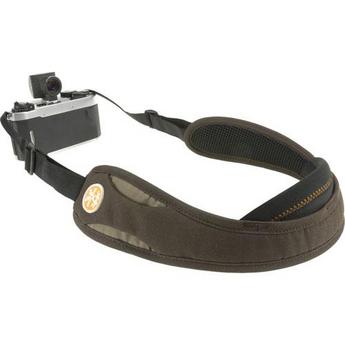
A neckstrap by another name

I wanted to let my brother (also a recent purchaser of a Nikon) know about a piece of equipment I had acquired. From the email:

As you can guess, your brother chafed under the Nikon yoke. Or, said otherwise, never having been a “natural” fan of Nikons (just as I am not a “natural” fan of Porsches), I really didn’t like wearing the stock black neckstrap with the bright yellow “NIKON” on each shoulder. Besides, it’s kind of a clunky neckstrap.

Enter the Industry Disgrace!

Yes, the Industry Disgrace. By Crumpler. $30 worth of escape from Nikon-logo neckstraps.

A nice neckstrap. The straps lie flat on the chest. The camera pitches forward very little, even with the 55-200 mm zoom on it. The behind-the-neck “feel” is comfy. Lots of length adjustment.

And I can walk around with out feeling “cringe-y” because my neckstrap has exhibitionist tendencies (except, of course, for those of us who recognize the obscure Crumpler logo for what it is – everyone else is wondering what Punchy, the Hawaiian Punch mascot, is doing on your shoulder).

So…swap your snooty Nikon neckstrap for a snootier Industry Disgrace. I did. I’m now the hottest snot in town. Just ask me.

To which my brother replied:

Agree on all points. Will investigate strap.

I go one step farther. Black electrical tape cut to fit over “NIKON” on flash housing. Ditto over “D90” emblem. It helps when shooting groups of people in candid settings because they don’t read “NIKON” and react. Cartier-Bresson used to paint his Leicas black. to keep from distracting people.

Katrina post

I booted up an old Fujitsu tablet computer today that hadn’t been used for over three years and on the desktop was the text of an email that I sent to family and friends in September of 2005 following my first trip back to New Orleans after we evacuated for Katrina. The photos referred to in the text are posted to my Flickr account in a set called First post-Katrina visit.

I did make a trip to New Orleans this week, leaving Providence Wednesday morning and returning Thursday evening. When I turned the corner to pull into our driveway, our Fireman’s Fund insurance adjuster was leaning on the back of his rental car waiting for me. The pictures I referred you to come from the visit and provide a kind of random documentary of stuff.
The west end of the metropolitan area – the airport is in the west – is living a pretty normal life. Some wind damage to what you could conceive of as misbegotten structures (e.g., a six-story, windowless tower clad in aluminum used by the Coca-Cola bottling plant lost its entire western wall; an oversized roof-like canopy used to shield VIP parking in one of the commercial parking lots across from the airport simply collapsed onto the parking lot) but otherwise, the area is functioning. Gas stations open, accepting credit card payment at the pump, etc. People living fairly ordinary lives. A resident of that area remarked to me, “I guess I don’t have to worry about finding work any time soon,” referring to the fact that from the minute you get off the plane you see “help wanted” and “now accepting applications” signs everywhere.
As you move towards the east – we live about 10 miles east of the airport – conditions deteriorate. The major reason for this is that the 17th street canal flooding was contained at the parish line. Jefferson Parish, on the west, remained dry as Orleans Parish filled up with water. {Although I got no further east than our neighborhood, the story would continue…the lower Ninth Ward, with the Industrial Canal flooding, is another 6 or 7 miles to the east of us and is now a waste land. Another 30 miles and you reach Waveland, Pass Christian, Biloxi, etc, where the storm surge obliterated the coast line.}
So our neighborhood was without power, the water is questionable, and no businesses are open. In the pictures, the Calhoun Superette is our neighborhood grocery store, and you can see the five-foot high waterline. On Wednesday, only about 25 percent of the homes in our immediate neighborhood showed any signs of having been visited…ruined stuff moved out into the street and – in one case – a generator with dehumidifiers and air circulation equipment already at work…but people were on the way back in. One of my immediate neighbors had returned the day before, the other pulled up a couple of hours after I did.
Tree limbs were everywhere. Part from the storm, part from the overly zealous tree-trimming companies hired by our electric utility to clear the wires for re-stringing. Normally, they are fairly surgical about creating space around the wires, say about three feet. Post-Katrina the instructions were to cut anything within 20 feet of the wires…so you see some trees that look like they’ve been beheaded (I think there was a photo of one such tree at the back of our house). A 50-foot tall cypress standing next to our house had been snapped off at the 20-foot level; surprising in that I thought cypress were the monarchs of the swamps, not surprising given that of the 10 cypress surrounding the entry to Audubon Park, seven are now gone. So much for being a monarch of the swamp.
The pictures accidentally document the cleanup of the limbs and trash that’s going on. There are two pictures of the Audubon Boulevard sign taken four hours apart, with the difference being that the trash pickup vehicles moved through the area: Two 20-foot shipping containers with a small crane mounted between them pulled by a semi-tractor. The driver parks, jumps down, operates the crane from between the containers picking up trash and trees and then moves on.
The house was hot. The attic was hotter. Probably in the 110 degree range. The adjuster and I tramped through the house. His two primary tools are the laser measuring device and a humidity gauge. As you have seen the contents of the house appear to be in good shape. The water never made it above the door sills, so there was no standing water in the house. There is, however, the stench that pervades New Orleans, and I brought out some clothes to see if the smell can be gotten out by washing. (The answer to that question was no, the smell didn’t come out. There are still things in boxes – and even in one of the closets – that make our eyes water from the residual smell.)
On the other hand, if you looked at the pictures of the floors inside the house, you could see what appears to be dusty lines along the seams of the floorboards. Mildew. The water had reached the bottom of the floors and the water got drawn up. The floorboards are slightly cupped from warping where there is no covering; there is more evidence of warping where the water got trapped underneath vinyl flooring. As you could see, a carpet on the floor looks okay at a distance, but close up you can see the mold that formed when the seepage came up through the floor and dampened the carpet.
On the outside, the heating/air conditioning unit was clearly drowned, and the supply and return ductwork for the downstairs was completely submerged. So that has to be replaced.
Still sounds pretty okay. However, the humidity gauge indicates that the water got pulled up into the sheetrock. In the one place where we pulled baseboard away from the wall, there was a line of mold growing. Upstairs, there was some water infiltration into the walls from a broken window in Jed’s room, and also – according to the adjuster – from the open vents under the eaves in the attic. So the humidity gauge goes off for the upstairs sheetrock as well. The adjuster says that the sheetrock should be stripped to the studs, the studs and weatherboards allowed to dry completely, and then new sheetrock applied. Upstairs and down. (The carriage house behind the house is on a slab at ground level, and as you saw had over three feet of water in it. The adjuster says that that needs to be gutted and the studs encapsulated before starting over.)
The bottom line, according to the adjuster, is that in normal times it would take six months to get the job done. His estimate for the job now that there will be so much demand for contracting services is a year. So the good news is that a lot of our treasures are safe. The bad news is that the house will be unserviceable for quite a while.
Exactly where we come out on this won’t be determinable until we find out what the Fireman’s Fund adjuster settles on as their idea of a settlement and, even more uncertain, what the flood insurance adjuster will pick up. As you probably have heard, the two sources of insurance meet at the waterline, flood below and household above; but the meeting point is really just the beginning of debate. I return to the house on October 12th to meet the flood insurance adjuster. That will begin to answer the question of what their concept of fairness is.
Meantime, we are here in Bristol by the bay. Laurie has completed her first two back-to-back 12-hour shifts at the Miriam Hospital in Providence and actually navigated back to our house without getting lost at the end of the second shift. I am teaching my class at Roger Williams University and trying to keep up with the developments at Tulane, where announcements of a January opening seem optimistic although the University was filled with the sound of giant generators and a corps of contract workers is struggling to get the physical plant ready. We will visit Jed at Northwestern this coming weekend, staying with Bob and Gael Strong, and then return to Bristol where Addie will have part of Sunday and Columbus Day with us.
Thanks for all of your thoughts and good wishes. We have been truly fortunate. Our sympathy goes out to the great many people who have been less fortunate in the wake of Katrina and Rita than we were.
The most memorable thing about this visit was the night that I spent in Uptown New Orleans. As the afternoon faded, an exodus took place. The small army of workers on the Tulane campus were bussed back to Jefferson Parish for the night, and independent contractors/workers drove out of the city. The National Guard patrolled in their HumVees, loosely enforcing a curfew. I had no idea how strict or lax they might be, so before sunset I made my way to our friends’ house on the east side of Audubon Park. They had offered it because the flood waters hadn’t reached it but their refrigerator had had to be removed. They wanted to replace it but they didn’t know its model number and my visit was timed perfectly to read the required information from the refrigerator – still on the curb outside the house – and phone it to them so they could order the proper equipment.
The silence of the park was eerie. Many people who spent evenings in the city during this period reported the silence as a startling feature of the post-Katrina landscape. The silence was complete, animal and insect noises were gone. I stood on the jogging track and walked a bit on the familiar surface that was made entirely strange by the absence of people. It was the beginning of an evening and night when the hairs on the back of my neck were always raised. It wasn’t hard to imagine oneself as the last person in the city. (Of course, that was an illusion. There were a lot of people including the National Guard. But relatively speaking, and particularly as night fell and the absence of electricity became evident with the encroaching dark, the city felt empty.
I hadn’t been too good in my planning. I had a camera and a video camera to record the damage to our house, and I’d picked up water and snacks on the way in from the airport. But I hadn’t thought too much about night or a meal. My hosts for the evening, in addition to telling me where the key to the house was hidden, had told me which drawers to rifle through for flashlights and batteries, so I had a bit of light in the unfamiliar house. I was told I was welcome to use one of the children’s bedrooms upstairs but after looking over the layout  I opted for the couch in the den.
Supper was a cello bag of cashews and a packet of cookies. The house was hot. Cooler on the ground floor, but too warm for comfort.

Auto rants (3)

It’s been a year, and now I am (and the rest of you out there are, too) a part-owner of General Motors. Wish there were better news for the future, but it looks like they still don’t get it. Today’s New York Times reports that for “consistency” we will now have to refrain from calling anything Chevrolet a “Chevy.” The marketing people are behind this mandate which they see as a brand-strengthening move.

Last year I made it pretty clear (in Kick as Kick Can and Auto Rants (2)) that the problem with Chevrolet as a brand isn’t that people use a diminutive and endearing term once promoted by GM (Dinah Shore sang it long before they were driven to the levee). The problem is that Chevrolet doesn’t refer to anything identifiable but rather to an incredible range of vehicles that start with a Chevrolet-branded Daewoo manufactured in Korea and proceed upward in size and power through the Corvette and a series of heavy-duty trucks.

Bob Lutz is gone from the hallways of General Motors, but this latest brain-dead solution to GM’s branding problems is a case of thinking ‘way down deep within the same old box. As Ford is in the process of recognizing with the proposed elimination of the Mercury brand, re-badging vehicles with multiple brands is counter-productive in today’s market. Ford would compete in the US market with *gasp* only two brands.

First Tuesday in May

Two geese calling incessantly approaching from the shadows across the Mill Gut, falling silent and flying ten feet overhead and ten feet to the east, then resuming their calling as they skimmed the surface of the bay lit by the glow from the sky. A beautiful set of changing sunrise colors, a bright half moon straight up in the sky.

All kinds of songbirds, the ground under the cherry trees – which would have been in full bloom this past weekend if it hadn’t been for Thursday and Friday’s wind and rain that blew down the petals – strewn with a thick layer of pink petals. The grove of lilacs blooming behind the cherry trees is giving off a cinnamon-like smell that persists for perhaps a hundred yards.

Turning past the head of Bristol harbor, it was quiet enough to hear the whooshing sound of the beat of a heron’s wings coming up behind me, then flying on south towards Bristol Marine Services. Temperature in the upper 50’s, very hard to beat.

The final stages of lilac blooming on the stem I’ve been tracking are below: April 18th, April 25th, and May 2nd.